
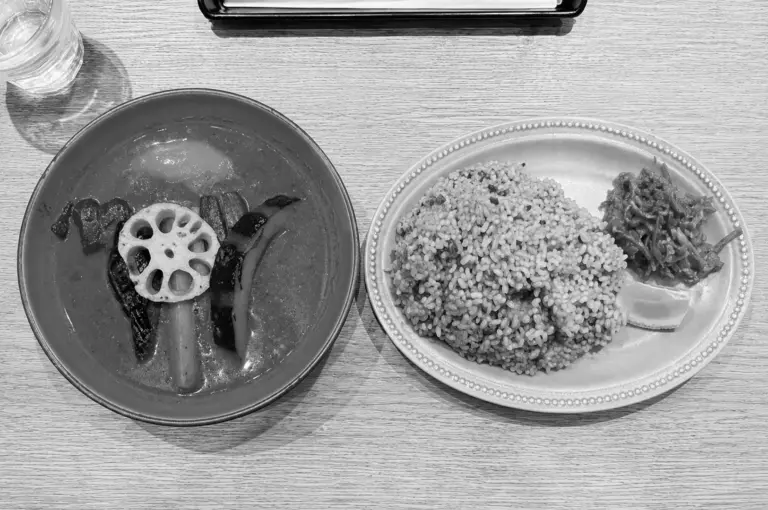
Japanese curry has always been easy to understand. It is thick, familiar, and comforting in a way that does not ask too much from the diner. A plate usually arrives with rice, a rich curry sauce, and something crispy or hearty on the side. It is the kind of meal people turn to when they want something filling, predictable, and satisfying.
Soup curry feels different.
It still belongs to the same family of Japanese comfort food, but the experience is not the same. Instead of a thick curry sauce that coats everything heavily, soup curry is built around broth. It is lighter, clearer, and more open. You do not simply eat it; you move through it. Each spoonful can taste slightly different depending on what it touches first, the vegetables, the meat, the spices, or the rice.
That is what makes soup curry interesting. It does not feel like regular Japanese curry only made thinner. It feels like a different way of thinking about curry altogether.
The first thing we usually notice is the role of vegetables. In many curry dishes, vegetables can feel like supporting ingredients. They are there to add colour, sweetness, or texture, but they rarely lead the meal. In soup curry, the vegetables are not side characters. They matter.
A bowl can come with pumpkin, eggplant, lotus root, okra, cabbage, carrot, potato, broccoli, bell pepper, or mushrooms, and each ingredient brings something different to the broth. Some vegetables soften and release sweetness. Some hold their shape. Some absorb spice. Some add crunch. The result is a curry that feels layered without being heavy.
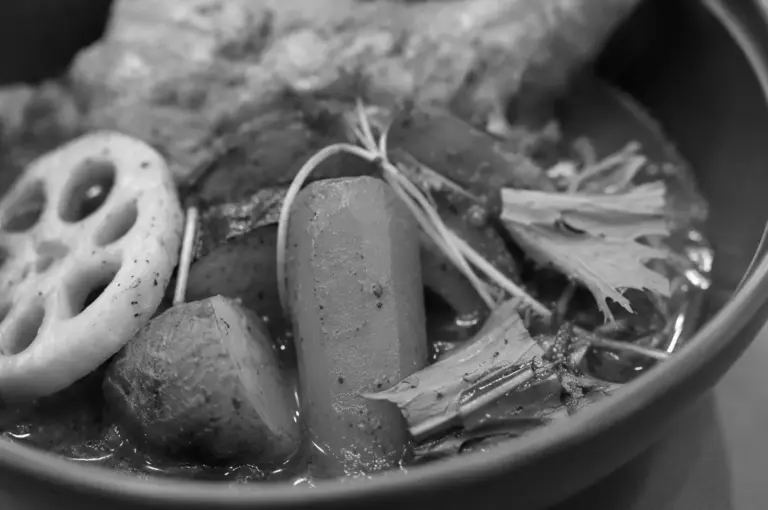
This is where soup curry separates itself from the usual image of comfort food. It gives diners the warmth and satisfaction of curry, but with more space. The broth does not sit heavily on the tongue. The vegetables keep the bowl lively. The rice is usually served separately, which also changes the rhythm of the meal. You can dip it, spoon the broth over it, or alternate between the two. There is no single correct way to eat it.
A good soup curry broth should also keep evolving. The first sip may taste clean and spiced. A few minutes later, after the vegetables have softened further or the chicken has released more flavour, the broth begins to deepen. By the end of the meal, it may feel richer than when it arrived, but not tiring. That slow change is part of the appeal.
Regular Japanese curry often gives comfort through density. Soup curry gives comfort through movement. It does not overwhelm, and that matters especially in a city like Singapore, where many of us are eating between work, errands, and long commutes. Sometimes we want something warm, but not something that leaves us sleepy. Soup curry fits that space well. It feels nourishing without asking us to slow down completely.
There is also an emotional side to it. Soup curry works beautifully as a solo meal. It does not demand a group. It does not need sharing plates or conversation to feel complete. One bowl, one portion of rice, and a quiet table can be enough. The act of choosing what to eat first, how much rice to take, and when to return to the broth creates a small, peaceful routine.
For us, that is why soup curry makes sense as an after-work reset. After a long day, it offers warmth without heaviness, flavour without noise, and comfort without the feeling of overindulgence. It is still curry, but calmer. It gives the body something satisfying and gives the mind a little room to breathe.
That may be the simplest way to understand the difference. Regular Japanese curry feels like a full stop. Soup curry feels like a pause.
And sometimes, after a long day, a pause is exactly what we need.
Click here: https://foodreportersg.com/ to visit Food Reporters SG for more stories on the dishes, dining habits, and food cultures shaping the way we eat today.