
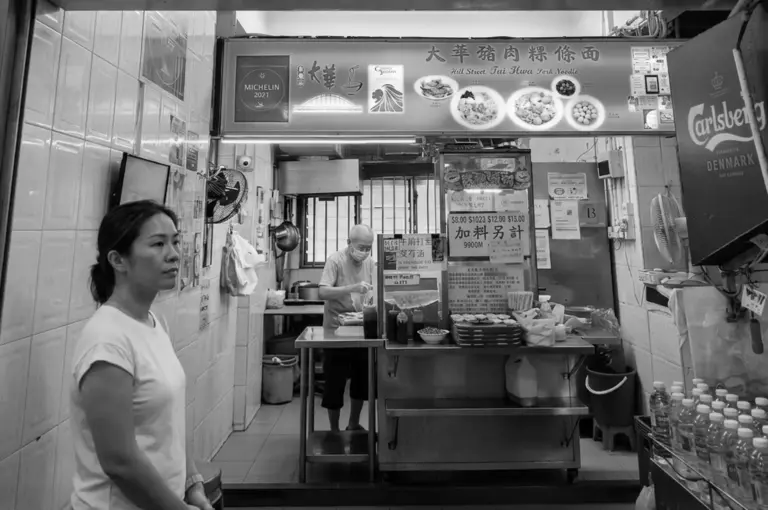
For years, I have analyzed the operational strategies of Singapore’s top food and beverage establishments. But sometimes, the most profound culinary mastery is not found in a multi-million dollar restaurant kitchen. I recently decided to revisit a legendary hawker stall that single-handedly shifted the global perception of street food. I visited Hill Street Tai Hwa Pork Noodle on a Tuesday around 10:30 am, hoping to beat the infamous lunch crowd.
Even at that hour, the queue was already winding past the neighboring shops. Standing in line, I could smell the sharp, intoxicating aroma of black vinegar and savory pork broth drifting through the humid air. This is not just a place to grab a quick meal; it is a pilgrimage site for culinary enthusiasts. As the first hawker stall in the world to be awarded one michelin star, it holds a unique position in our local dining economy. I wanted to see if the operational consistency and food quality still justified the grueling wait.
Atmosphere and First Impressions for This MICHELIN-Starred Hawker Stall
The stall is located within the Tai Hwa Eating House, a traditional, open-air coffeeshop tucked away at Crawford Lane. The atmosphere is unapologetically functional. You will not find any air conditioning or mood lighting here (so I highly recommend wearing light clothing, as the heat can become quite oppressive). It is loud, bustling, and completely focused on the business of feeding people.
Despite the humble setting, there is a distinct rhythm to the operation. Behind the glass of the hill street tai hwa pork noodle stall, the cooks move with absolute precision. You can watch them tossing the noodles, portioning the minced meat, and splashing exact measurements of their signature vinegar sauce into each bowl. Finding a table can be a competitive sport during peak hours, so it is best to visit with a companion who can secure a seat while you stand in the queue.
The Legacy Behind the Bowl in Hill Street Tai Hwa Pork Noodle
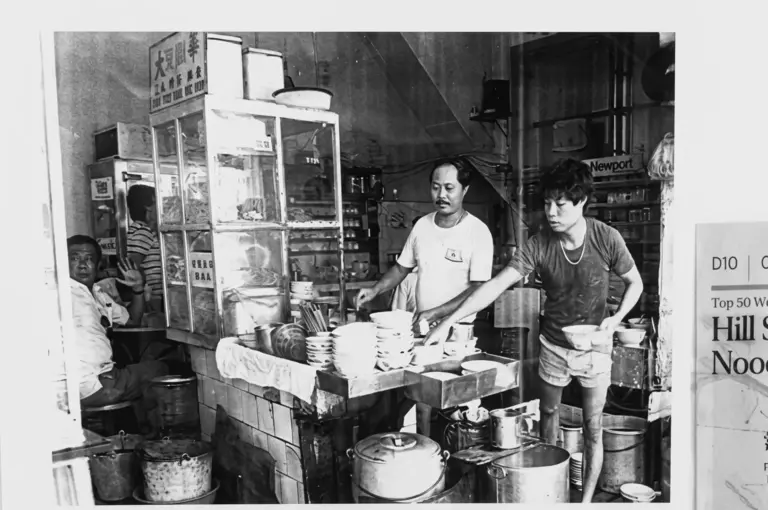
To truly understand this dish, you have to appreciate its history. The original recipe was pioneered in the 1930s by the late Mr Tang (specifically Tang Joon Teo), who began selling his unique minced pork noodles around the Hill Street area. Hill Street Tai Hwa Pork Noodle is recognized as the originator of the modern Teochew-style Bak Chor Mee. Over the decades, the business expanded and the legacy was passed down to his two sons, each of whom took over and expanded different branches of the family restaurant.
Today, the Crawford Lane operation is run by Tang Chay Seng, while other variations like Tai Wah Pork Noodle are managed by the same family—specifically, Tang Chai Chye, the son of Tang Joo Teo, runs a different stall, highlighting the family’s deep roots in Singapore’s bak chor mee scene. Both Hill Street Tai Hwa Pork Noodle and Tai Wah Pork Noodle serve bak chor mee, a popular Singaporean dish made with minced pork and noodles, but they have distinct differences in their preparation and flavor profiles. While you might hear debates among locals comparing street Tai Hwa Pork with other family branches, the Michelin star belongs exclusively to this specific stall at Crawford Lane. The dedication to preserving the original Hill Street Tai Hwa flavor profile is immediately evident.
Mouth Watering Dishes to Try: Food Descriptions and Details
After waiting for exactly one hour, I finally reached the counter. I ordered their large Signature Dry Bak Chor Mee ($10) and a side of Meatball Soup ($6). Bak chor mee, a popular Singaporean dish, typically consists of springy egg noodles, minced pork, wontons, and a savory chili sauce that is often enhanced with black vinegar. The anticipation was high, and I was eager to dig into this tasty meal.
The Signature Dry Bak Chor Mee
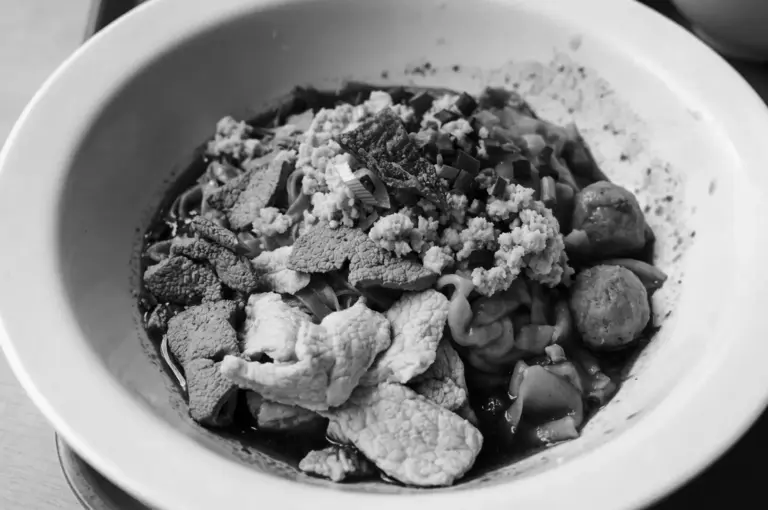
When my bowl arrived, it was a masterclass in layered textures and aromas. I opted for the mee pok (flat egg noodles), which were cooked perfectly al dente. Hill Street Tai Hwa is known for its thicker noodles cooked to a firm texture, while Tai Wah’s noodles are thinner and have a more springy, ‘QQ‘ texture, which some diners prefer. The noodles possessed a wonderful springy bite that held up beautifully against the heavy dressing. The defining characteristic of hill street tai hwa pork noodle is the aggressive use of black vinegar. The sauce is sharp, savory, and intensely porky, with a spice level that builds a pleasant heat at the back of your throat. The sauce at Hill Street Tai Hwa is noted for its balance of flavours, though some reviews mention it can be overly salty at times, while Tai Wah’s sauce is more balanced with a hint of sweet oiliness from lard oil.
The toppings are where the technical execution truly shines. The bowl was generously loaded with well-formed minced pork, tender pork slices, perfectly soft pork liver, and small meatballs. There’s also ti poh (dried sole fish), which adds a deep umami flavour to the dish. I have to specifically praise the liver; it is notoriously difficult to cook well in a hawker setting, but here it is served flawlessly tender with no chalky aftertaste. The dish is finished with crispy bits of dried sole fish and fried pork cracklings, which provide a brilliant, salty crunch that cuts through the rich sauce. Every single bite offers a different combination of savoury, sour, and spicy notes, resulting in a complex and satisfying flavour profile.
Meatball Soup and Dumplings
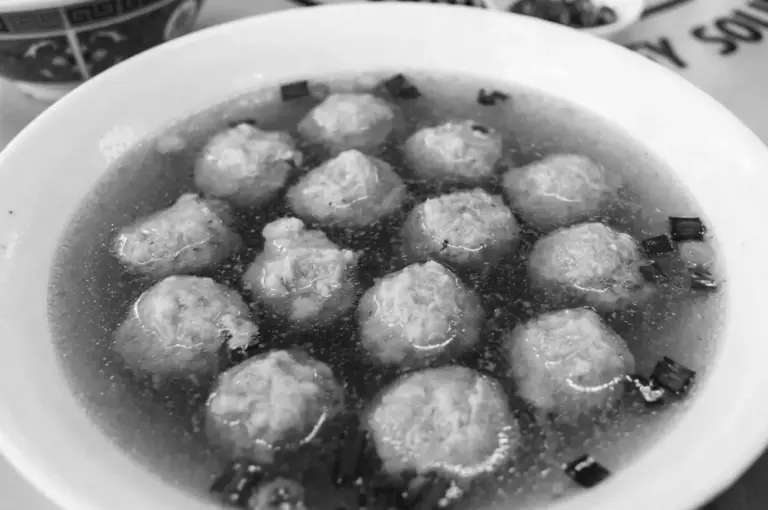
To contrast the intense dry noodles, the accompanying soup is a masterclass in clean, robust extraction. The broth is clear but packed with a deep, natural sweetness from hours of simmering pork bones. The meatballs are bouncy and flavorful, and I was glad I ordered an extra portion.
I also noticed the delicate dumplings floating in the broth. The wrappers were silky soft, encasing a well-seasoned filling of minced pork and dried flounder. Drinking the hot soup between bites of the sharp, vinegar-laced mee provided a perfect palate cleanser. It is a highly satisfying meal that leaves you feeling full but not overly greasy.
Service Experience at this One MICHELIN Star Hawker Stall
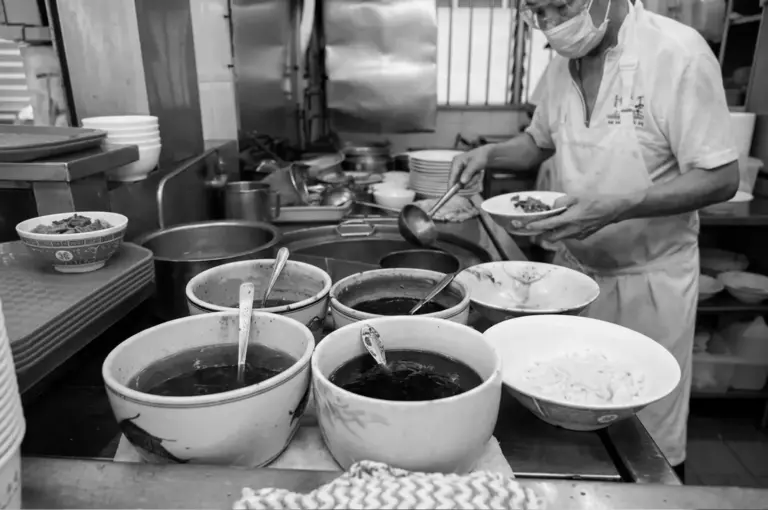
The service at hill street tai is highly efficient, yet deliberately paced. Unlike stalls that mass-produce components, every single bowl of bak chor mee here is cooked to order. The uncle behind the counter meticulously boils the noodles, mixes the sauce, and blanches the pork liver for each individual customer.
This commitment to quality means the queue moves at a slow, methodical crawl. While the staff are polite and direct, you are expected to know your order by the time you reach the front. I must be honest about the downside: the wait is a significant investment of your time. On weekends, it is not uncommon to wait up to two hours. If you are in a rush or extremely hungry, this might not be the right spot for your breakfast or lunch.
Practical Information
Pricing: You should budget between $6 and $10 per bowl, depending on the portion size. The $10 bowl is quite substantial and could easily satisfy a very large appetite.
Location: The stall is located at Blk 466 Crawford Lane, #01-12. It is roughly an eight to ten-minute walk from Lavender MRT station.
Operating Hours: They are open from 9:30 am to 8:30 pm, but they close on the first and third Monday of every month. I highly advise checking their schedule before making the trip.
Practical Tips: The best time to visit is mid-afternoon (around 3:00 pm) when the lunch rush has subsided. If you drive, parking around the HDB estate can be notoriously difficult, so taking the MRT is definitely the smarter choice.
Final Verdict
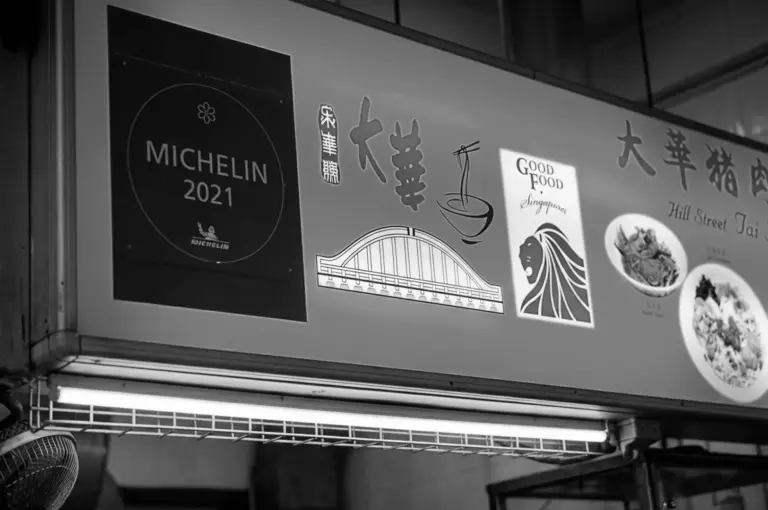
Hill Street Tai Hwa Pork Noodle offers an unapologetically intense, traditional bowl of noodles. The sharp vinegar, the rich minced meat, and the expertly cooked liver create a flavor profile that is completely unique to this shop. It is easy to see why the michelin guide awarded them a star; the technical consistency required to produce this dish hundreds of times a day is nothing short of remarkable.
However, it is a highly polarizing dish. If you prefer mild flavors, or if you dislike the taste of vinegar and pork offal, this bowl might overwhelm you. It is also not suitable for diners who lack the patience to endure a long, hot queue in a crowded food centre.
Yet, for serious food lovers, culinary historians, and anyone who appreciates the rigorous demands of the hawker profession, it is an absolute must-visit. Unlike the tragic trajectory of Hawker Chan (who lost their star after expanding too aggressively), Tai Hwa has remained stubbornly focused on their single Crawford Lane location. They have prioritized quality over rapid expansion, and the results speak for themselves. This is, without a doubt, one of the most important bowls of noodles in Singapore.
If you enjoyed this deep dive into the operational mechanics and culinary execution of Singapore’s MICHELIN-recognized stalls, you can check out Food Reporter SG for more posts and similar articles to read.