
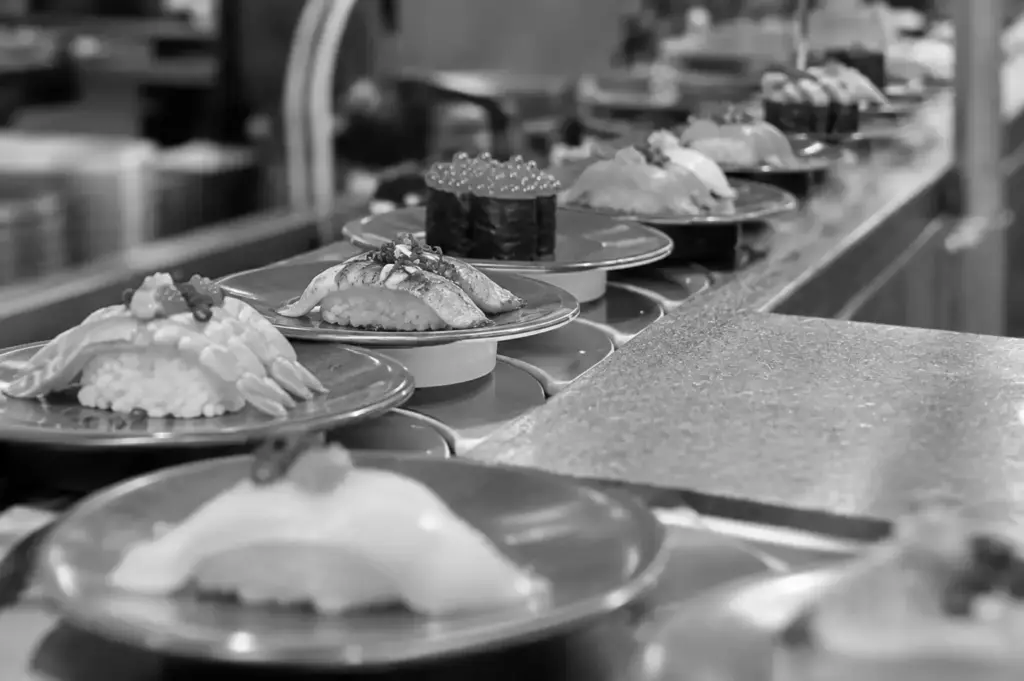
The first thing I noticed was the sound. A soft, steady hum under the chatter of a mall food floor on a weekday lunch hour. Small sushi plates drifted past at eye level: salmon, tamago, a clear dome over something bright orange. Nobody seemed in a hurry, yet everything was moving along the sushi conveyor.
Many of us in Singapore meet sushi this way. It might be a quick solo lunch before errands, a weekend family meal after a queue, or a first visit to Sushiro, Genki Sushi or Sushi Express with a tablet waiting on the table. It’s exciting. It can also be a little confusing if you’re not sure what you’re allowed to touch, how the plates are priced, or whether that salmon has been circling for too long.
This guide explains what kaitenzushi is, how conveyor belt sushi works, what to order first, and how to eat sushi well in Singapore.
What Is Kaitenzushi? Understanding Sushi Conveyor Belt Restaurants
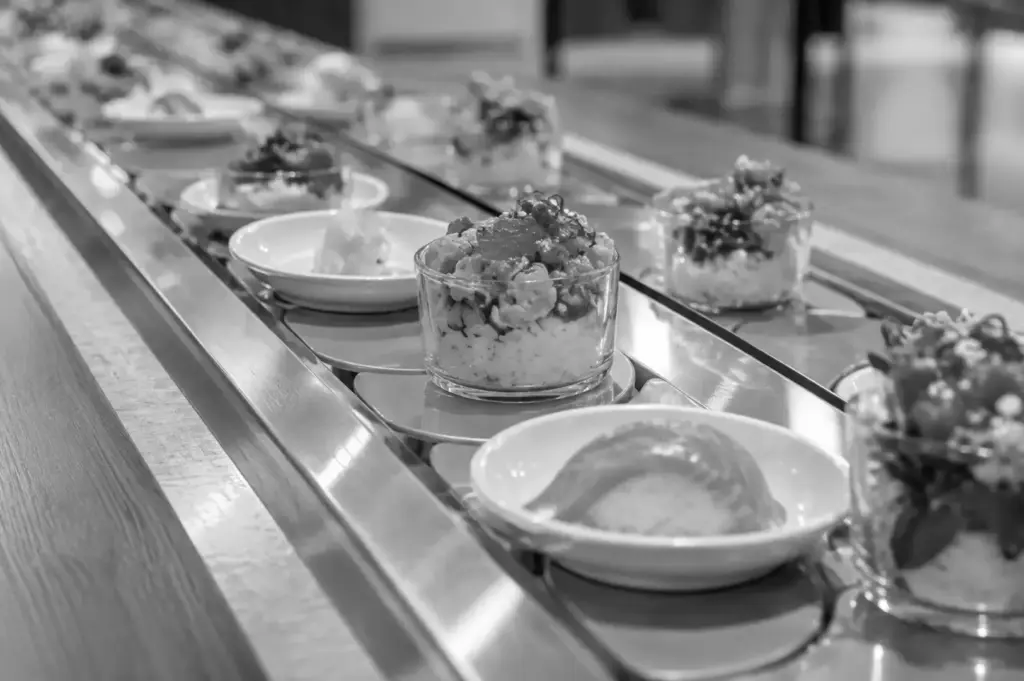
Kaitenzushi means conveyor belt sushi. Kaiten means rotating or revolving, and zushi is sushi. In a kaitenzushi restaurant, plates of sushi move around the room on a conveyor belt, and you take the ones you want as they pass. You might be seated at counter seats or in a booth.
Many modern kaiten sushi restaurants have added a second layer. You can order sushi directly through a tablet, a QR code or a touchscreen electronic ordering system, and the dish arrives by an express lane, a small sushi train-style delivery system, or straight down the conveyor belt to your seat.
The sushi itself is familiar. You’ll find nigiri (a slice of topping over a mound of sushi rice), maki (rolls), gunkan (rice wrapped in nori seaweed and topped with loose ingredients such as salmon roe or sea urchin), inari sushi (rice in sweet fried tofu), and aburi (lightly torched sushi). Most places also serve cooked dishes like fried chicken, noodles, miso soup, and desserts including savory steamed egg custard.
Common misconception: Kaitenzushi is not a type of sushi. It's a style of restaurant service where sushi is served on a moving conveyor belt or through an automated ordering system.
That’s also what separates it from omakase and more formal sushi restaurants, where sushi chefs decide what you eat and serve it piece by piece. At many kaitenzushi restaurants, you decide.
A Brief History of Kaitenzushi and the Conveyor Belt Sushi Boom
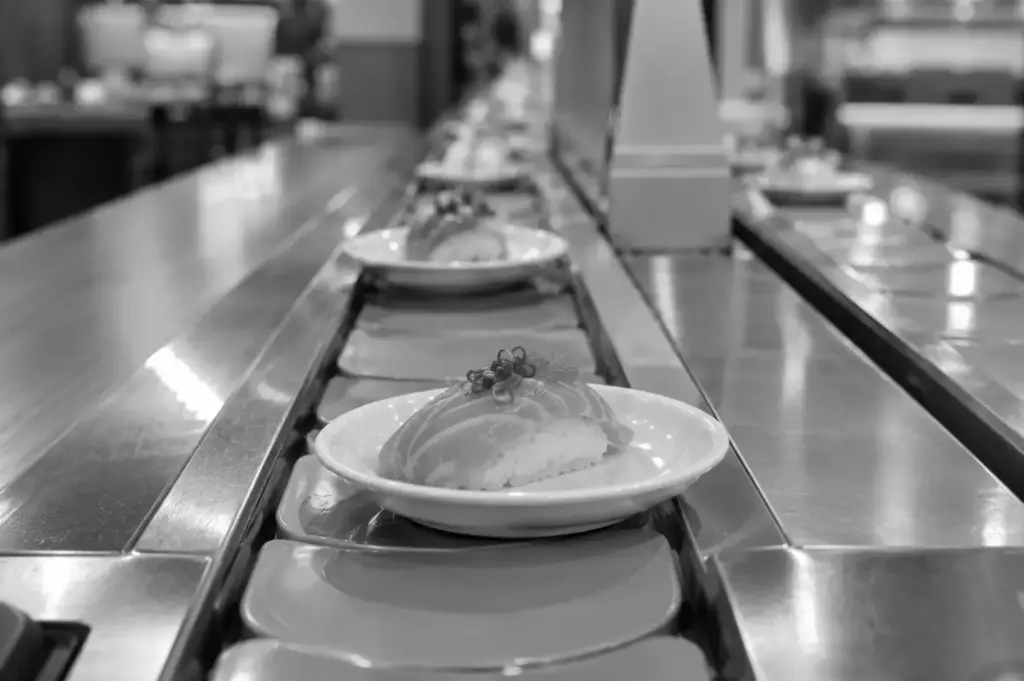
Kaitenzushi was invented by Yoshiaki Shiraishi in Osaka in 1958. Before then, sushi was often seen as a more exclusive food, dependent heavily on skilled sushi chefs, and fish prices shifted with the market.
The conveyor belt changed that. Sushi became faster, more consistent, and more affordable, transforming sushi from a luxury into cheap sushi accessible to many. The kaitenzushi boom took off after the 1970 Osaka World Expo, then spread across Japan and overseas.
Today’s kaitenzushi restaurants have kept the sushi conveyor but added covered plates, time controls on belt items, digital ordering, and express delivery lanes. The original appeal hasn’t changed much. It’s still sushi you can see before you choose.
How Conveyor Belt Sushi Works in Kaitenzushi Restaurants
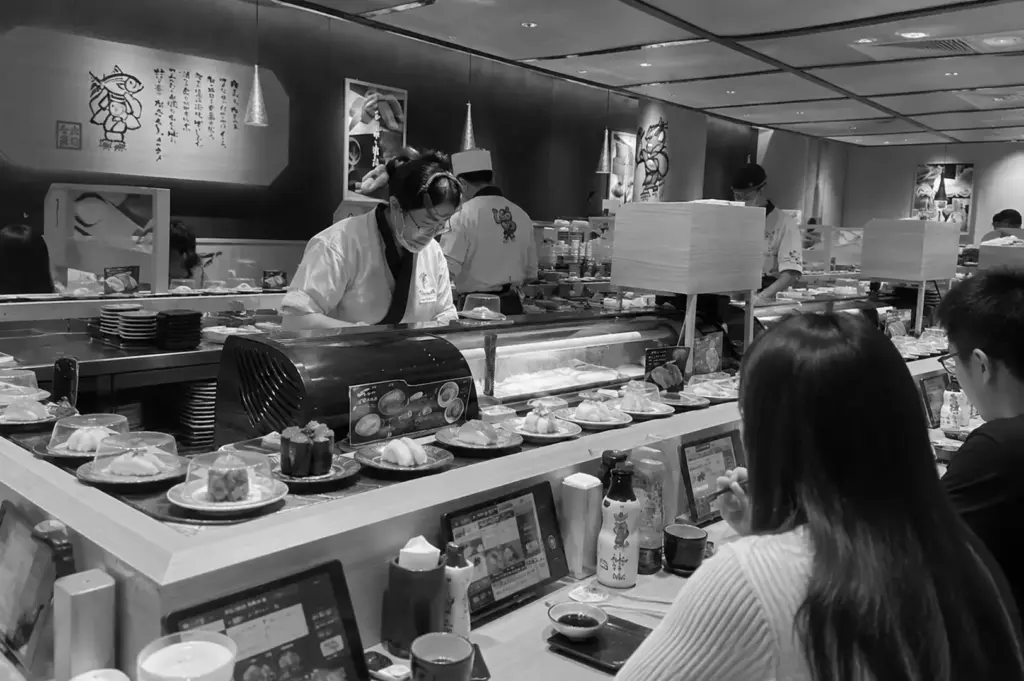
Step 1: Join the Queue at the Sushi Restaurant
Popular kaitenzushi restaurants in Singapore malls often have queues, especially on weekends, during school holidays, and around 7pm to 8pm. Some chains offer reservations or queue apps, so check before you go.
Step 2: Check the Pricing System Using Sushi Plates
This is the first thing I look for, every time. Most places use one of three systems:
Fixed-price plates: most plates cost the same.
Colour-coded sushi plates: each plate colour matches a price on a chart.
Digital pricing: the price appears on the tablet when you order sushi.
Step 3: Take from the Conveyor Belt or Order Freshly Made Sushi Directly
If something on the conveyor belt looks fresh and appealing, take it. If you want something specific, or a plate looks tired or has been on the sushi conveyor too long, order it from the electronic ordering system.
Insider knowledge: If the restaurant offers tablet ordering, use it for delicate raw fish so the item arrives freshly made sushi closer to the time you ordered it.
Step 4: Use Condiments Properly
Your table will usually have soy sauce, wasabi, pickled ginger, hot water dispenser for green tea powder (or powdered green tea), tea cups, chopsticks, and small sauce dishes. Use soy sauce lightly. The pickled ginger is meant to refresh your palate between pieces, not to be piled on top of the sushi.
Step 5: Stack Your Empty Plates Neatly
Many kaitenzushi restaurants count your stacked plates to work out the final bill using a counting machine. Others log everything digitally. Either way, a tidy stack helps.
Step 6: Check the Final Bill
Take a quick look before you pay. This matters most in a group, where plates can pile up faster than anyone notices.
Kaitenzushi vs Conventional Sushi Restaurants and Formal Sushi Restaurants
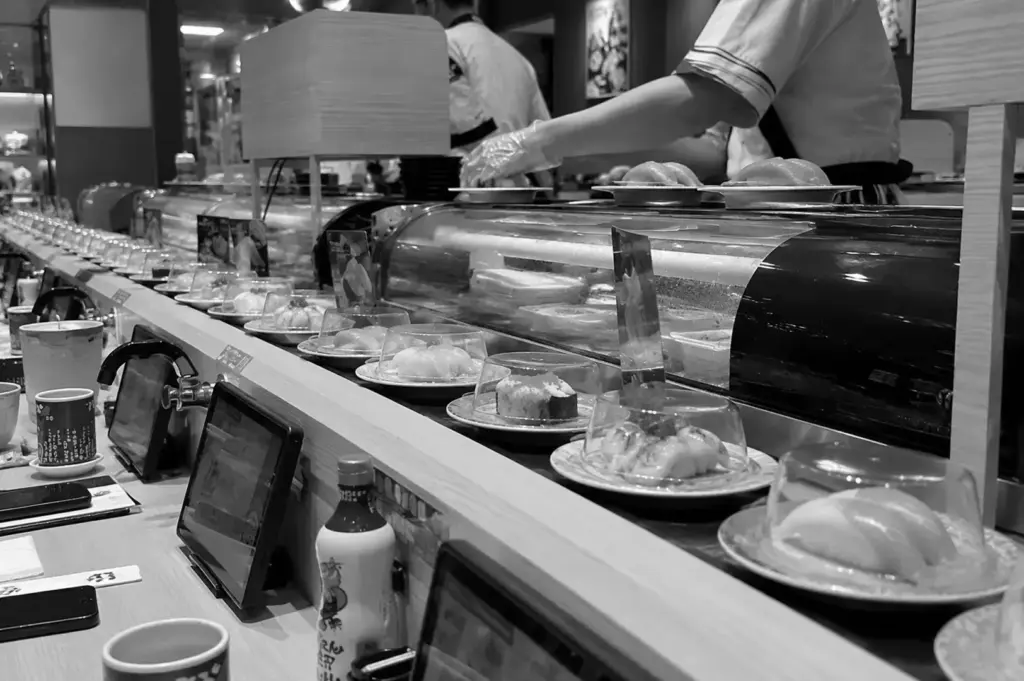
I think of kaitenzushi and more formal sushi restaurants as two different conversations with the same food. One is casual and lets you set the pace. The other is quieter, led by sushi chefs, and built around seasonality and sequence.
Feature | Kaitenzushi | Conventional Sushi Restaurants / Formal Sushi Restaurants |
|---|---|---|
Service style | Conveyor belt, tablet, express lane, or self-selection | Chef-led or direct ordering |
Price control | Easier to manage by plate or item | Usually a set menu or higher spend |
Pace | Casual and flexible | Slower and more structured |
Beginner-friendly | Very approachable | Can feel more formal |
Menu choice | You choose freely | The sushi chefs may decide the sequence |
Best for | Casual meals, families, quick sushi cravings | Special occasions, premium sushi, technique-focused dining |
I’ve found that kaitenzushi is one of the easiest ways to learn what you like before committing to a full omakase meal.
What to Order First at Kaitenzushi Restaurants
If you eat raw fish: salmon nigiri, shrimp nigiri, fatty tuna, tamago (sweet omelette), aburi salmon, tuna maki, and savory steamed egg custard or miso soup.
If you’re avoiding raw seafood: inari sushi, tamago, cooked shrimp nigiri, unagi (grilled eel), corn gunkan, tempura maki, fried chicken, udon or ramen, and dessert.
If you want to try something more adventurous: ikura (salmon roe), scallop, hamachi (yellowtail), tuna or chutoro (medium-fatty tuna), sea urchin, seasonal specials, aburi items, and premium shellfish.
Pay attention to the sushi rice as well as the topping. It should be lightly seasoned, and it shouldn’t be mushy, dry, or packed too tightly. A plain piece of tamago on good sushi rice (shari) can be more satisfying than an expensive plate that’s been sitting out.
Pro tip: Start with three or four plates before ordering heavily. Conveyor belt sushi makes it easy to over-order because everything looks tempting.
Typical Costs at Kaitenzushi Restaurants
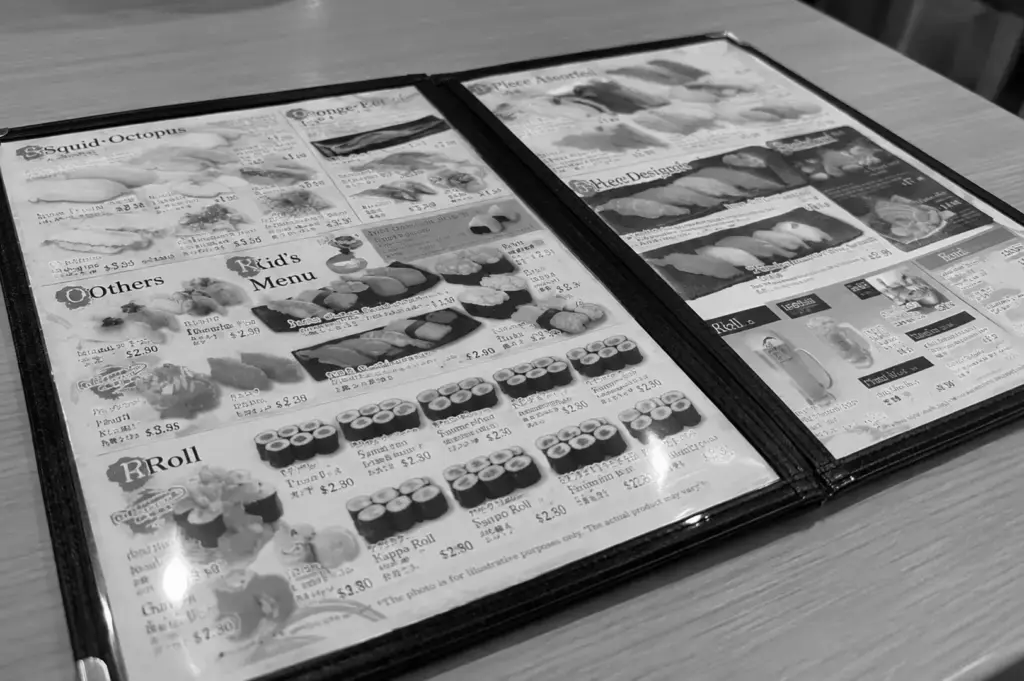
Prices change, so treat these as rough ranges:
Budget chains: basic plates from around S$1.50++ to S$2++. A light meal may come to around S$10 to S$18. This might be the basic sushi rolls, like cucumber rolls among many others.
Mid-range kaitenzushi restaurants: a casual meal usually costs around S$15 to S$30 per person.
Premium plates: uni (sea urchin), ikura, otoro, chutoro, scallop, botan ebi, wagyu, and seasonal specials cost more.
Extras: sides like miso soup, savory steamed egg custard, desserts, drinks, ramen, and chawanmushi add up quickly.
Always check the colour chart or tablet price before you take a sushi plate. On a colour-coded system, two similar-looking plates can cost quite different amounts.
Common Mistakes First-Timers Make at Conveyor Belt Sushi Restaurants
Taking sushi plates without checking the price chart. The conveyer belt carries plates of sushi. Look first, then reach. If you don’t like it, let the sushi past.
Touching a plate and putting it back on the sushi conveyor. Only touch what you plan to eat.
Returning a plate to the conveyor belt. Once you’ve taken it, it’s yours.
Over-ordering early. Pace yourself. Specific dishes can cost more than others, so be sure to check,
Drowning sushi in soy sauce. Dip lightly, ideally fish-side down.
Mixing a lot of wasabi into the soy sauce. Taste the sushi first, since some pieces are already seasoned.
Skipping the free tea. Many establishments have a hot water faucet in each table to allow guest to make green teas for free. Some even have some complimentary pickled plum in small food storage container in your table.
Eating the topping and leaving the sushi rice. The sushi rice is half the dish. If you want just the fish, then go for authentic sashimi instead of sushi.
Look beyond the belt. Some places offer other dishes that you wont see on the revolving sushi belt, like drinks; beer bottles, tea; then desserts.
Ignoring freshness cues. If a plate looks dry, skip it.
Letting children play with the conveyor belt or delivery lane. Keep small hands clear.
Forgetting to check the final bill. At the end of the meal, do not forget the total bill. It takes a minute.
Common mistake: Once you take a plate from the sushi conveyor, keep it. Don't put it back, even if you picked it up by accident. Allow the plates stacked up.
Kaitenzushi in Singapore: The Best Conveyor Belt Sushi Experience
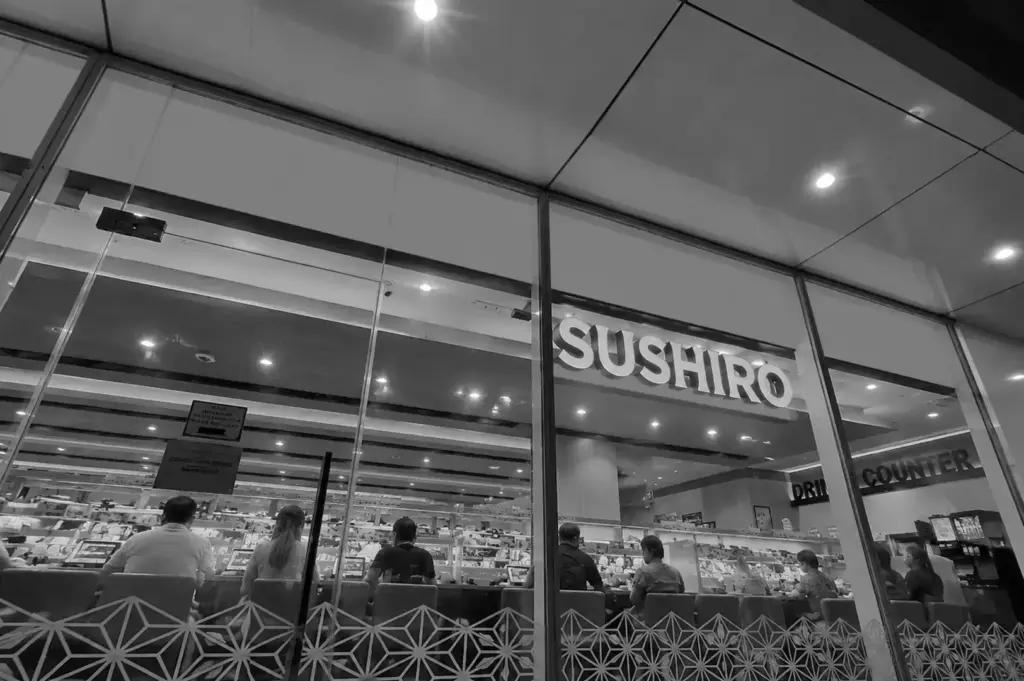
Kaiten zushi suits the way many of us eat here. It’s fast, casual and visual. It works for a solo lunch, a family meal before a movie, or a group where one person loves raw fish and another only wants tamago. It’s also easier to control your spend than at many conventional sushi restaurants, alot of them also offering very competitive prices.
Sushiro Singapore has a broad menu of sushi, seasonal specials, ramen, and desserts, and offers reservations through its app options. One of the well know inexpensive restaurants for sushi, Genki Sushi Singapore is known for its “Kousoku Express” system, which sends sushi ordered straight to your table, and children tend to find it fun to watch. Sushi Express Singapore is often mentioned as one of the most budget-friendly options, with plates commonly cited at S$1.50++.
Casual doesn’t mean careless, though. It’s still raw seafood, and it still deserves your attention. For more sushi to try in Singapore, feel free to try reading out guide by clicking here.
A Quiet Way In: Why Kaitenzushi Remains Popular
Kaitenzushi made sushi more approachable. It gave people a low-pressure way to try small dishes, see the food before choosing, and learn what they like. It’s a style of service rather than a kind of sushi, and it rewards anyone who takes a moment to understand it.
Check the pricing, start with a few familiar plates, order delicate fish from the tablet, and trust your eyes. The conveyor belt will keep moving. You don’t have to.