
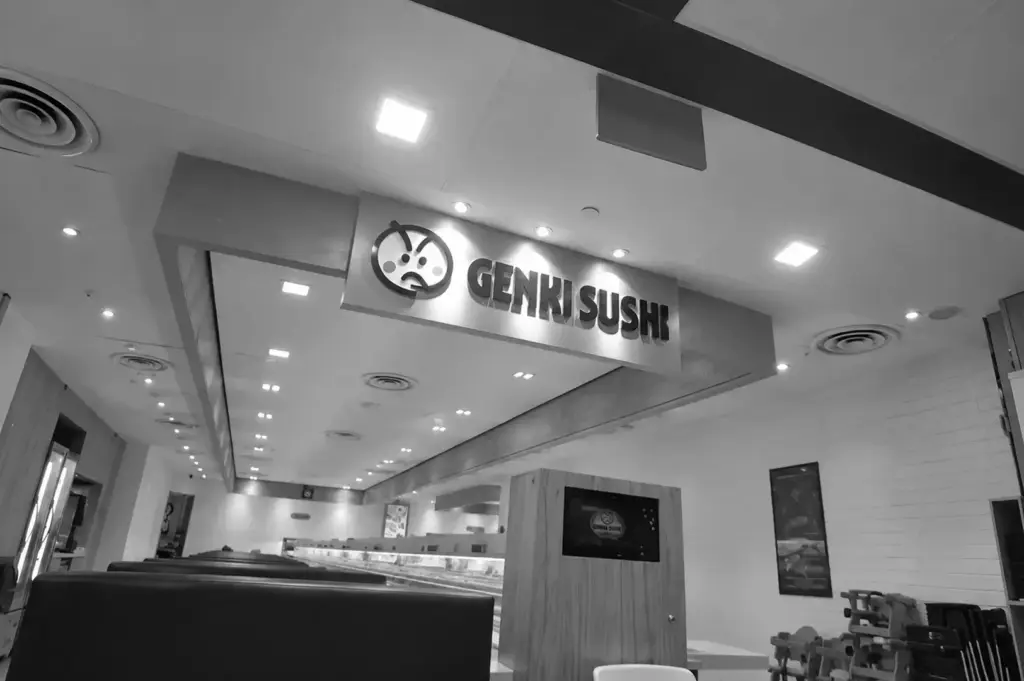
It was a weekday, a little before noon, and Chinatown was already warm. I came up from the MRT through Exit E still thinking about nothing in particular, and within a few minutes I was sitting at a table in the basement of Chinatown Point, watching a small tray glide towards me on a track. It stopped exactly where it should.
On it was a plate of Salmon Mentai. Nobody had carried it over. Nobody had said a word.
I’ve eaten at Genki Sushi many times over the years, mostly without thinking much about it. It’s the kind of place you reach for when you’re hungry and short on time. This visit I wanted to pay attention. I wanted to know whether Genki Sushi Chinatown Point still does the quiet, useful things people count on it for, and whether this particular branch is worth choosing in a neighbourhood that is never short of food.
First Impressions at Genki Sushi Chinatown Point
The outlet sits at #B1-14, on the basement level of Chinatown Point. (Some older listings still show a second-floor unit, so don’t let them send you upstairs.) It feels like what it is: a clean, bright, modern chain restaurant built for easy meals. There’s no attempt at the hush of a sushi counter, and I didn’t expect one.
What defines the room isn’t the décor. It’s the track.
Genki’s Kousoku Train system runs along the tables. Instead of plates circling on a belt and waiting to be chosen, each order is made and sent directly to your seat. Ordering happens on your own phone (Genki calls it BYOD, or bring your own device). You scan, you browse, you tap, and a few minutes later the tray arrives. After you lift your plates off, you press a button and send it back to the kitchen.
The concept goes back to Japanese sushi chef Fumio Saito, who developed a revolving-sushi (kaitenzushi) idea in 1968. Genki returned to Singapore in 2011, and its Orchard Central outlet was the first outside Japan to use the Kousoku system. Sitting there, I found it strangely calming. There’s no pressure to grab something before it disappears. You order what you want, when you want it.
Each table has a small compartment holding chopsticks, soy sauce and the other condiments. By the time I’d sorted out my dipping dish, the room around me was filling steadily. Office workers in lanyards, a couple sharing a phone screen, a mother pointing out the arriving trays to a small boy who watched each one as though it were a real train. It was lively without being loud. A place for lunch, not for lingering.
What I Ordered: The Salmon-Heavy Menu at Genki Sushi Singapore
Genki leans hard into salmon right now. Its current “Salmon Feast” lists more than 40 salmon items, and it became clear quickly that this is where the menu is most at home. So I followed it.
Salmon Mentai (S$3.40)
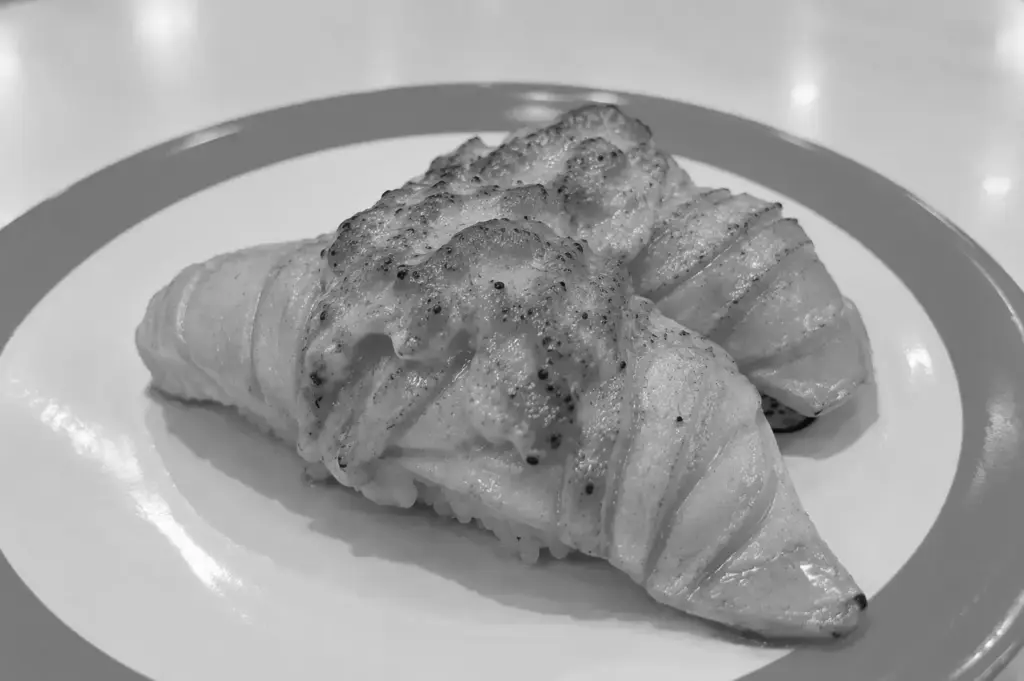
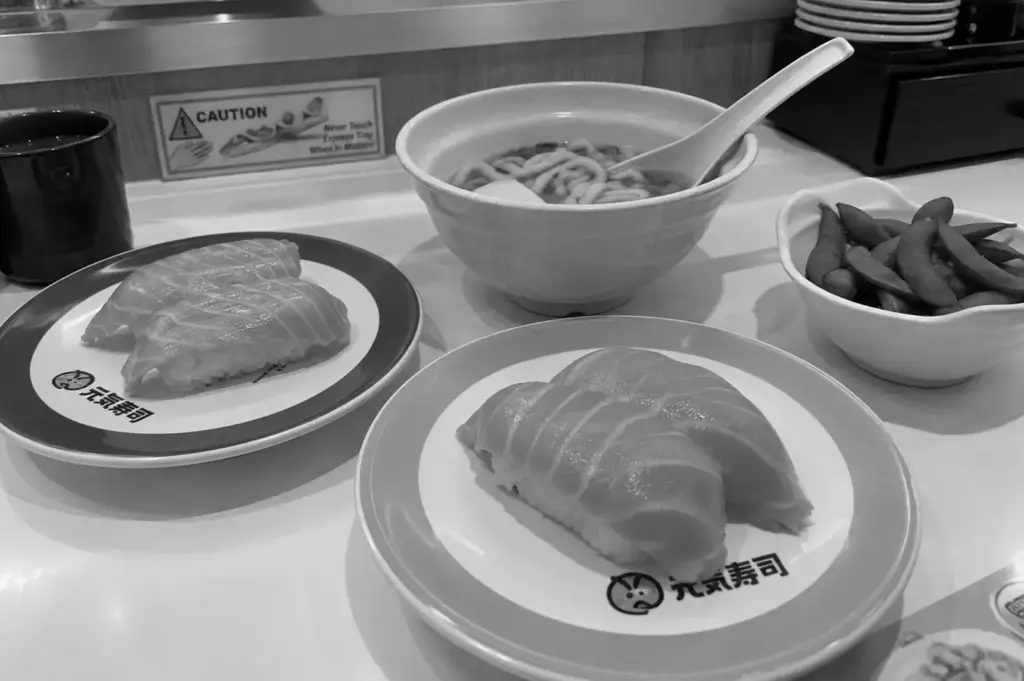
This was the first plate, and the one I’d return for. Two pieces of nigiri, the salmon lightly seared, topped with a swipe of mentaiko mayonnaise that had been torched until the edges turned golden and slightly blistered.
It arrived warm on top and cool underneath, which is exactly the contrast that makes it work. The mentaiko was creamy and gently salty, with that faint roe pop, and the sear gave the salmon a soft, smoky richness. The rice held together without being packed too tightly. Genki says it uses 100% Japanese rice imported from Japan and vinegar from Gifu Prefecture. I can’t taste a prefecture, but the rice was lightly seasoned and didn’t collapse.
At S$3.40, it’s small, but it isn’t trying to be anything other than what it is. I understood why so many tables around me seemed to have ordered it too.
Salmon Sashimi (S$5.60) and Salmon Belly Sashimi (S$6.90)
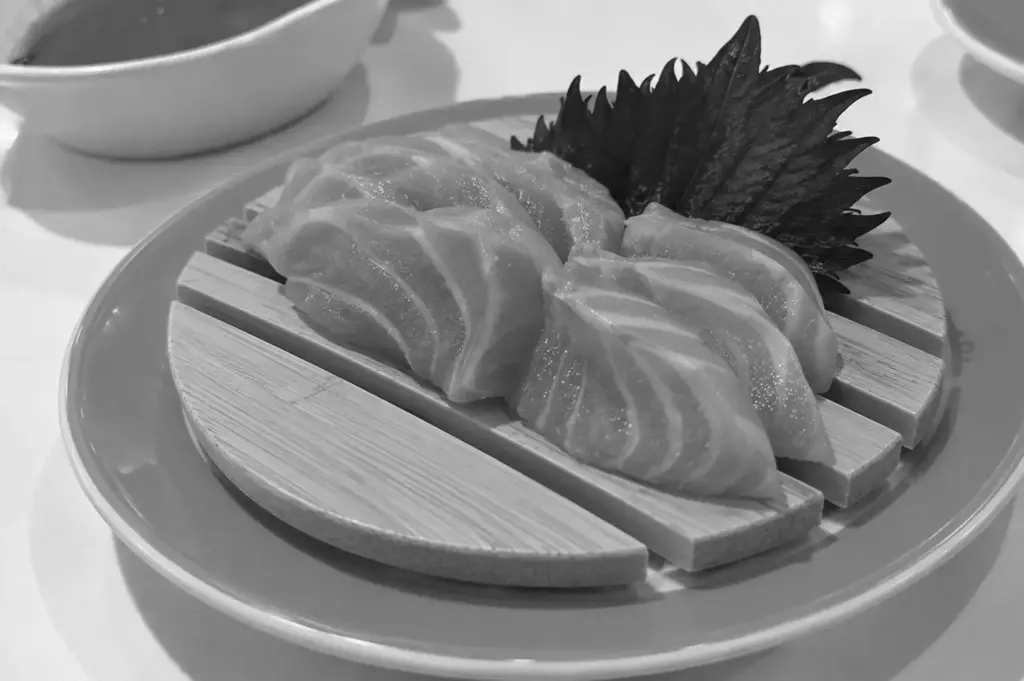
I ordered both, side by side, because I wanted to see the difference.
The Salmon Sashimi came as neat, bright-orange slices, cold and clean-tasting, with a firm bite and a mild sweetness. There was no fishy smell. It was simple, and freshness is what recent diners at this outlet mention again and again. On my visit, that held true.
The Salmon Belly Sashimi was the richer of the two. The slices were paler, marbled with fat, and softer against the teeth. It coated the palate in a way the regular cut didn’t. I used barely any soy sauce. For S$1.30 more, I’d choose the belly next time, though the regular salmon is the more honest measure of the kitchen.
Neither portion was large. These are a few slices each, meant to be one part of a meal rather than the whole of it.
Salmon 3 Flavours (S$4.80)
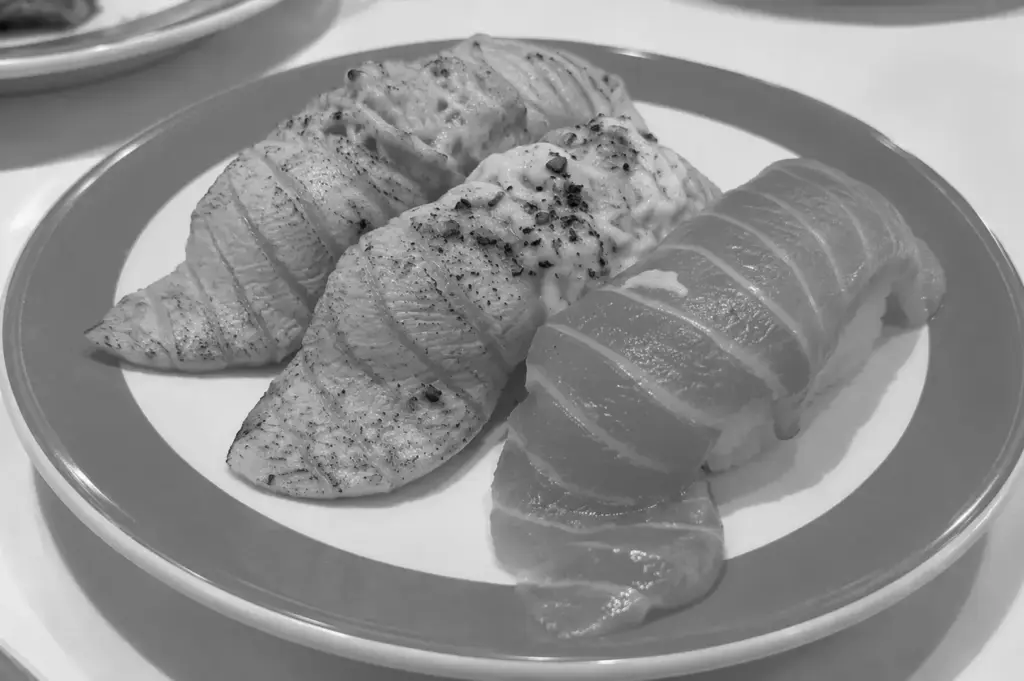
If you’re visiting for the first time, this is a sensible way in. It’s three pieces of salmon nigiri, each prepared differently, so you get a small sampling of how Genki likes to dress its salmon. It’s a little like reading the table of contents before choosing a chapter.
I enjoyed it most as a comparison. It confirmed what the Salmon Mentai had already told me: the seared, sauced pieces are where Genki’s personality comes through.
On the Side: Mentai Mayo Fries and Chawanmushi
The Mentai Mayo Fries are a long-running favourite, and I can see why. Thin shoestring fries, crisp and hot, with a rich mentaiko sauce over the top. It’s comfort food with no pretence.
My only complaint is one other diners have raised too: the sauce ran out before the fries did. The last third of the portion was plain. I’d happily pay a little more for a proper amount of sauce.
The Chawanmushi was small, warm and smooth. It held a piece of prawn, a slice of fishcake and some mushroom. There was nothing elaborate about it. It was the kind of thing you eat slowly between colder plates, and it steadied the meal.
Where It Fell Short
Not everything worked as well.
I ordered a Gyu Don partway through, curious whether the cooked dishes could keep up with the seafood. The rice was fine and the sauce was sweet and savoury, but the beef leaned chewy. It wasn’t bad, just forgettable. I noticed later that others have said something similar about Genki’s beef over the years. It confirmed what I’d already started to feel: this kitchen’s strength is salmon and sashimi, not meat.
The other issue is scale. Individual plates are small by design, and the mini donburi bowls live up to their name. That isn’t a flaw exactly, since the format is built around ordering several things. But it means the bill climbs faster than you expect. I stopped counting at some point and was a little surprised at the total.
Some diners feel certain plates cost more than at cheaper conveyor sushi chains, and I think that’s fair. Genki is mid-range casual sushi. It isn’t the cheapest option, and it isn’t premium either.
Price, Portions and Practical Tips
Good to know before visiting:
Address: 133 New Bridge Road, #B1-14, Chinatown Point, Singapore 059413
Hours: Daily, 11am to 10pm (last order at 9.45pm)
Contact: +65 6957 2720
Average spend: Around S$20 to S$30 per person, depending on how many plates you order
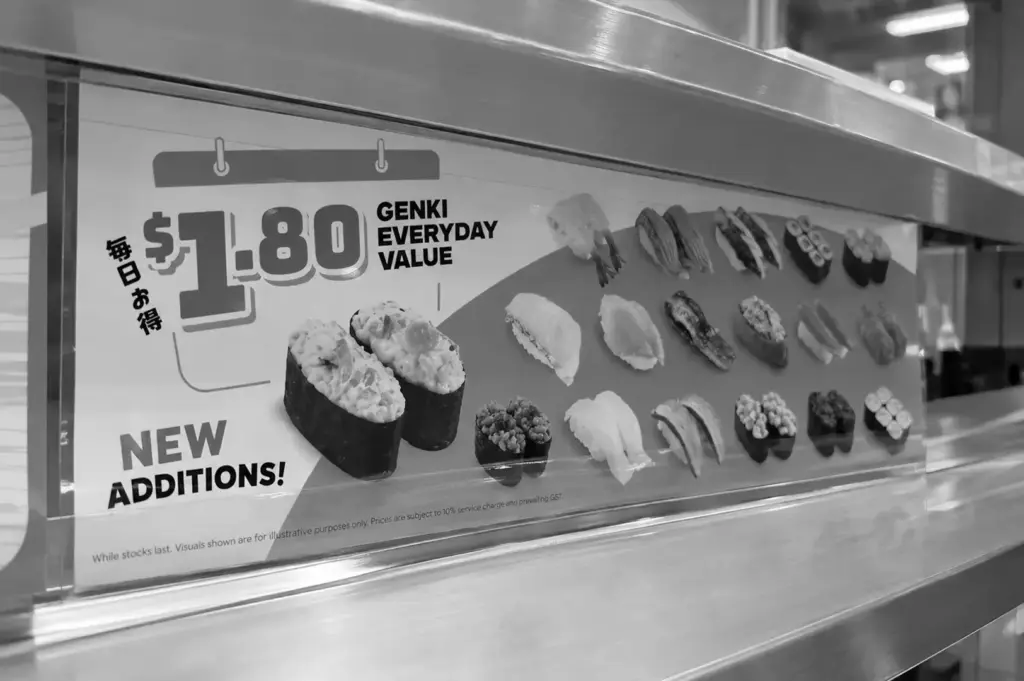
Prices mentioned: Salmon Mentai S$3.40, Salmon 3 Flavours S$4.80, Salmon Sashimi S$5.60, Salmon Belly Sashimi S$6.90, Irodori Sashimi Platter S$12.60
Lunch sets: Five weekday sets from S$7.90, available 11am to 5pm. These are the best value on the menu if you’re working nearby.
Portions: Small plates by design. Plan on several, and keep an eye on the running total.
Reservations: None. It’s walk-in only, so check the Genki Sushi app or call ahead if you’re coming with a large group.
Best time to visit: Before noon, mid-afternoon, or early dinner to avoid peak queues.
Getting there: Take Exit E from Chinatown MRT (North-East and Downtown lines) straight into the mall. Buses 2, 12, 33, 54, 143, 147, 190, CT8, CT18 and CT28 stop nearby.
Parking: Available at Chinatown Point, at S$1.96 per 30 minutes from 7.01am to 5pm, or S$3.82 per entry from 5.01pm to 7am.
Other options: Takeaway, plus delivery through foodpanda and GrabFood.
Best for: Solo lunches, families with children, salmon and mentaiko lovers, and colleagues looking for a quick meal.
Tip: Order in small rounds. Start with two or three plates, see how you feel, then add more. It keeps both your appetite and your bill honest.
Final Verdict: Is Genki Sushi Chinatown Point Worth It?
Food: 4/5
Service: 4.5/5
Atmosphere: 3.5/5
Would I return? Yes. Probably on a weekday, probably for lunch, and probably without thinking too hard about it. That’s what this place is for.
I’d order the Salmon Mentai again without hesitation, along with the Salmon Belly Sashimi and a warm Chawanmushi to balance the colder plates. If I were with someone, I’d add the Irodori Sashimi Platter to share. I’d skip the beef.
Genki Sushi Chinatown Point suits people who want casual Japanese food done cleanly and quickly: office workers, solo diners, families whose children will watch the train more closely than their food, and anyone passing through Chinatown who wants something light and familiar. It suits salmon lovers most of all.
It’s less suited to anyone looking for an omakase experience, a quiet dinner, or the craft of a traditional sushi counter. It’s not a place for a formal meal, and it doesn’t pretend to be.
Is it worth the price? For the salmon, yes. For the small plates in general, mostly yes, as long as you order with some restraint. What stayed with me wasn’t the novelty of the train. It was that first plate of Salmon Mentai, the blistered mayo still warm, arriving at my seat as though it knew where I’d be sitting.
Some meals ask for your attention. This one simply fed me well, and let me get on with my day.
If you enjoyed this review, you can find more honest sushi dining guides, restaurant reviews and food stories from around Singapore over at Food Reporter SG.