
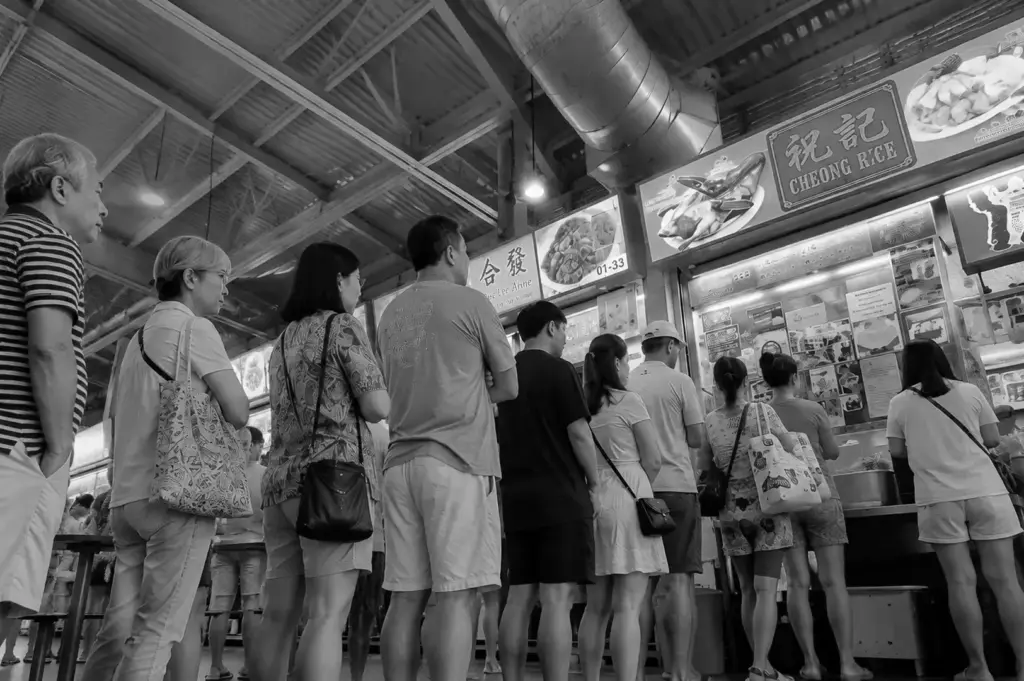
“Not every queue leads to great food, but every great hawker stall gives people a reason to return.”
I have stood in enough hawker queues to know that waiting can change the way food tastes. After 10 minutes, I am curious. After 30 minutes, I start expecting something special. After an hour, the meal is no longer just lunch; it becomes a test. Was the queue worth it, or did I simply convince myself it had to be?
In Singapore, queues have always carried meaning. A long line outside a hawker stall often works like a public review before anyone says a word. It tells passers-by that something must be good enough for people to wait. At hawker centres, where there may be several stalls selling similar dishes, the queue becomes a shortcut. Chicken rice, prawn mee, carrot cake, nasi lemak, wanton mee, char kway teow; when one stall has a line and another does not, most of us instinctively look at the busier one first.
But I do not think queues always reflect quality. Sometimes, they reflect habit. A stall may be famous because it has been around for decades. Sometimes, the line forms because service is slow, portions are prepared in small batches, or the stall owner insists on doing things one plate at a time. In recent years, social media has added another layer. A stall can go viral quickly, and suddenly people are waiting not only for the food, but also for the experience of saying they tried it.
That does not make the queue meaningless. It just means I have learned to read it more carefully.
For me, a hawker stall is worth waiting an hour for only when the food shows clear effort that cannot be rushed. A good broth that has depth, a wok-fried dish with proper heat, handmade ingredients, fresh frying, careful slicing, balanced seasoning; these are the things that justify time. The best hawker food often looks simple, but the work behind it is not simple at all. When a stall’s queue is caused by real craft, I can accept the wait.
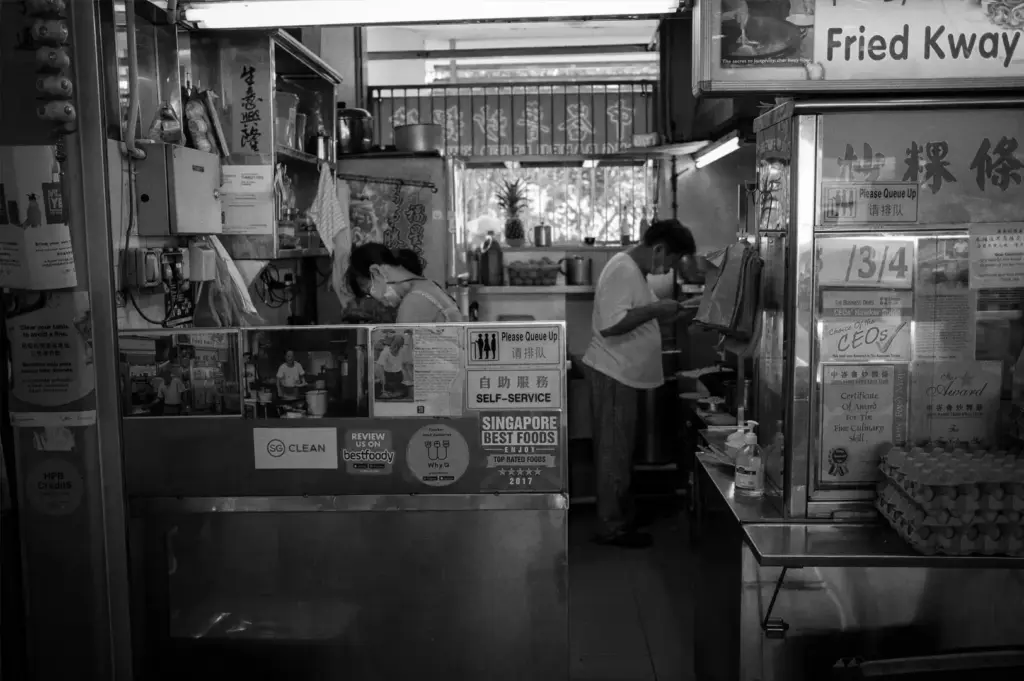
What I find harder to accept is a queue built only on hype. If the food arrives lukewarm, the portion feels careless, or the taste is merely average, the long wait becomes part of the disappointment. A famous name cannot protect a weak meal forever. Singapore diners may be patient, but we are not blind. We know when a stall is living off reputation, and we know when the auntie or uncle behind the counter is still cooking with pride.
There is also the emotional side of queuing. Some hawker stalls are worth waiting for because they connect us to memory. It may be the same laksa someone ate as a child, the same old-school fish soup near a former workplace, or the same plate of noodles a family has bought for years. In those cases, the queue is not only about taste. It is about continuity. People wait because the stall represents something familiar that has not yet disappeared.
Still, I think we need to be honest about our own expectations. Waiting an hour does not guarantee perfection. In fact, it can make us unfair. The longer we wait, the more we expect the food to justify our time. But hawker food was never meant to be judged like a grand performance. At its best, it is skilled, affordable, direct, and deeply rooted in routine.
So what makes a hawker stall worth waiting an hour for? Not fame alone. Not social media. Not a queue that everyone joins because everyone else is joining. For me, it is the moment when the first bite explains the wait without needing any defence.
A good queue may suggest quality, but a good plate proves it.
Visit Food Reporters SG for more stories on Singapore’s hawker stalls, food opinions, and the everyday meals worth paying attention to.